Introduction
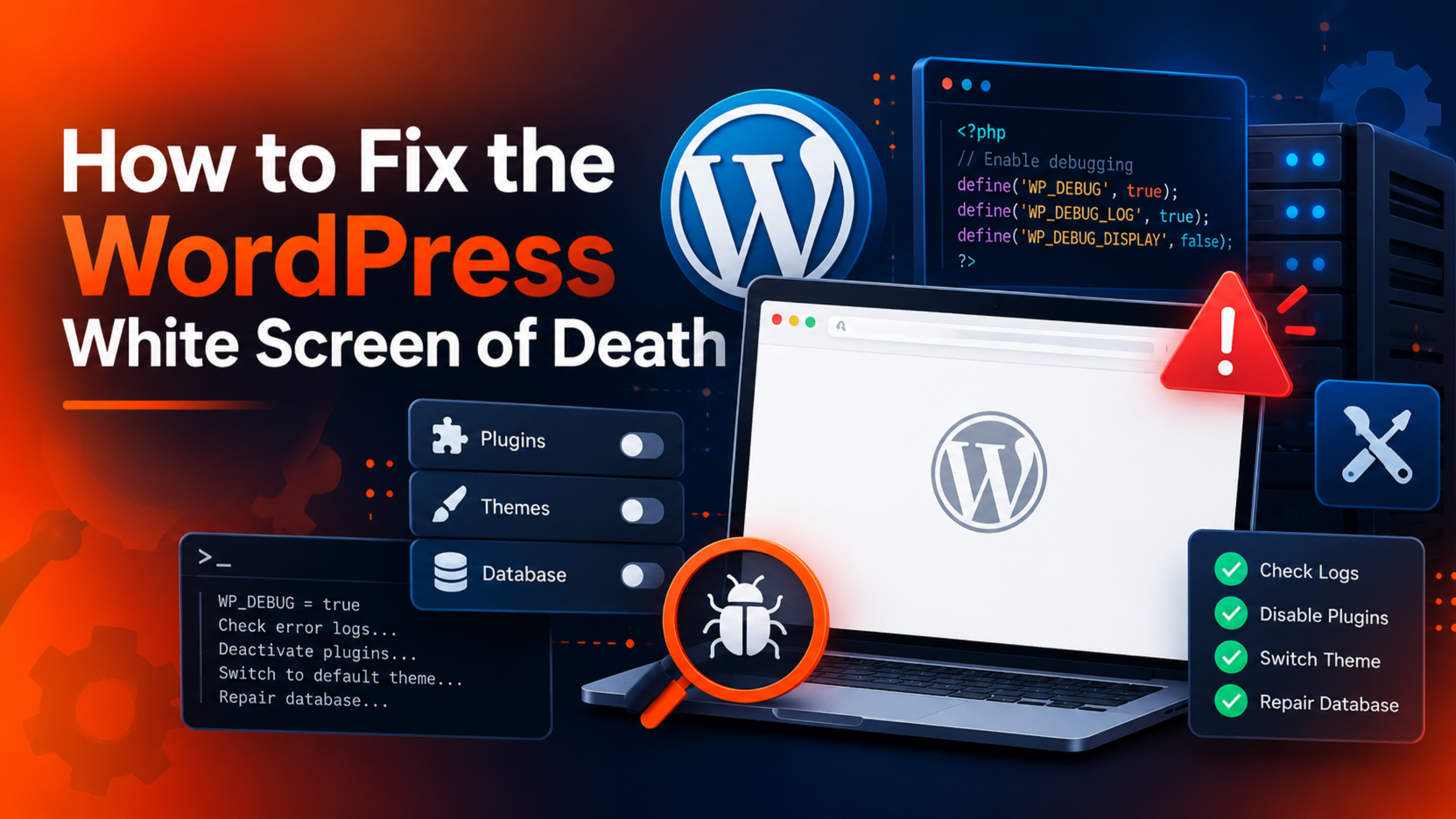
You open your website and nothing loads. There is no logo. There is no menu. There is no error message either. You just get a plain white page. WordPress users call this the white screen of death, or WSOD for short.
It is one of the most worrying faults you can meet. A missing page at least tells you something. A blank page tells you nothing at all. Your visitors see the same empty screen you do. Search engine crawlers see it too. Every hour of blank pages costs you traffic, sales and trust.
Here is the good news. A blank screen almost always comes from a short list of causes. Most of them you can fix yourself in under an hour. You rarely need to rebuild anything. You almost never lose your content.
This guide walks you through the whole job. First you will learn the signs that confirm you have this fault. Then you will learn what actually breaks behind the scenes. After that you get a fix for every cause, in a safe order. The last part shows you how to stop it happening again.
The usual triggers are easy to name. A plugin update goes wrong. Someone edits a theme file. PHP runs out of memory. A cache keeps serving an empty page. We cover each one below.
One quick note before you start. If your page shows the words “There has been a critical error on this website”, you are looking at a different screen. That one has its own guide: how to fix the WordPress critical error message. Come back here if your page is truly empty.
Signs That Show the WordPress White Screen of Death
The main sign is obvious. Your page is white and completely empty. But there are several versions of this fault. Knowing which one you have saves you a lot of time. Work through the checks below before you change anything.
Start with the page source. Right click the blank page and choose the option to view the page source. A healthy page shows a lot of HTML code. A true white screen shows nothing at all, or just a few opening lines that stop in the middle. That cut-off point is a strong clue. It means PHP stopped running part way through building the page.
Next, check how much of the site is affected. Sometimes every page is blank, front end and dashboard alike. Sometimes the front end works and only your dashboard is white. Sometimes one single page is blank and the rest load fine. Each pattern points at a different cause, and we use that later.
Then check whether being logged in changes anything. Open your site in a private browsing window. If the blank page only appears when you are logged in, the fault is in admin-side code. If it appears for everyone, the fault sits in code that runs on every request.
Look at the status code too, if you can. A white screen often returns a normal success code rather than an error code. That is why uptime tools sometimes miss it. Your site looks “up” to a monitor while your readers see nothing.
Finally, note what you changed last. Did you update a plugin? Did you switch theme? Did you paste a snippet into a file? Did your host move you to a new PHP version? The last change you made is the strongest clue you have.
If your dashboard alone is blank and the rest of the site is fine, our guide to a blank WordPress admin page goes deeper on that narrower case.
Reasons Why the WordPress White Screen of Death Happens
A blank page is not really an error. It is the absence of one. Something stopped PHP in the middle of its work, and nothing was printed in its place. Below are the real causes, and what each one actually does to your site.
A PHP fatal error with error display switched off. This is the single most common cause. PHP hits a line of code it cannot run. It stops the whole request at once. On a live server, error display is usually turned off for safety. So PHP sends you an empty page instead of the message. The error still exists. You just cannot see it yet.
The PHP memory limit is exhausted. Every request gets a memory budget. Heavy plugins, large images and big imports eat into it. When the budget runs out, PHP halts mid-page. WordPress tries to raise this budget to 40MB on a single site, and 64MB on a multisite network, as the official WordPress wp-config.php guide explains. On a busy site that is often not enough.
A plugin conflict or a broken plugin file. Two plugins can try to do the same job in the same place. One can call a function the other has removed. An update can also leave a plugin with half its files. Any of these produce a fatal error, and so a blank page. This is why a white screen so often appears right after an update.
A theme fault or a bad edit in theme files. Your theme runs on every single page. A missing bracket in one of its files breaks every page at once. Child themes add another risk. If a child theme calls a function the parent theme no longer has, the page dies.
An update that failed part way through. Updates replace files one by one. If the connection drops in the middle, you end up with new files and old files mixed together. The two sets do not agree with each other. That mismatch throws a fatal error. Our guide to a failed automatic WordPress update covers this pattern in detail.
A syntax error in wp-config.php or functions.php. These two files load very early. A stray quote mark or a missing semicolon stops PHP before anything is printed. A common mistake is pasting a snippet after the closing PHP tag. Another is pasting it below the “stop editing” line in wp-config.php.
Caching or a CDN is serving a saved blank page. Caches store a copy of your page and hand that copy to visitors. If the cache saved a copy while your site was broken, it keeps serving that empty copy. Your site may already be healthy underneath. The cache is simply hiding the repair.
OPcache or the server is still running old code. OPcache keeps compiled PHP in memory to make your site faster. After you fix a file, the server can keep using the old broken version for a while. The symptom looks identical to the original fault. Nothing you change seems to help.
Wrong file permissions or missing core files. PHP must be able to read every file it loads. If permissions get changed, or a core file goes missing, the load fails. Malware cleanups and bad migrations are the usual reasons. The result is the same blank page.
How to Fix the WordPress White Screen of Death (Step by Step)
Work through these steps in order. They run from the safest check to the deepest repair. Stop as soon as your site loads again.
Step 1: Rule Out Your Browser and Your Cache First
This step covers the cached blank page. Caches and CDNs store a finished copy of each page. If one was saved while your site was down, visitors keep getting that empty copy even after the real fault is gone. You can waste a whole afternoon chasing a fault that no longer exists.
Confirm this is your cause before you change anything. Open your site in a private browsing window. Then open it on your phone using mobile data, not your home connection. If one of those loads correctly, you are looking at a cached copy, not a live fault. If every device shows the same blank page, move on to the next step.
To clear it, start with your browser. Load the page again with a hard refresh. Then clear the cache in your caching plugin, if you can still reach your dashboard. If your dashboard is also blank, clear the cache from your hosting control panel instead. Most hosts put a server cache button on the main screen. If you use a CDN, purge everything there too.
Now reload your site in a fresh private window. If the page loads, you are done. If it is still blank, the fault is live and you can rule caching out. That is useful on its own, because it narrows the list of causes considerably.
Step 2: Turn On the Debug Log to See the Hidden Error
This step covers the hidden PHP fatal error. Your server is suppressing the message to keep your site secure. The error itself is still happening on every request. Once you can read it, the rest of this guide becomes much faster. The log usually names the exact file and line that failed.
You do not need to confirm anything first here. Every white screen caused by code will write a line to the log. If the log stays empty, that tells you something too. It points you toward caching, permissions or the server itself.
This step edits wp-config.php, which can take your site offline if you get it wrong. Download a copy of the file before you change it. Take a full backup as well if you still have dashboard access, using a tool like UpdraftPlus. Better still, try the change on a staging copy first if your host offers one.
Open wp-config.php over FTP or in your host’s file manager. Find the line that says to stop editing. Just above it, add these lines, exactly as the WordPress debugging documentation sets them out:
define( 'WP_DEBUG', true );
define( 'WP_DEBUG_LOG', true );
define( 'WP_DEBUG_DISPLAY', false );
Save the file and reload your blank page once. Then look in the wp-content folder for a file called debug.log. Open it and read the last few lines. You are looking for the words “Fatal error”. The line after it names a file path. That path tells you which plugin, theme or custom file is at fault.
Write that file path down. Then turn debugging off again by setting WP_DEBUG back to false. Leaving it on a live site is not safe. If the log points at a plugin folder, jump to step 5. If it points at your theme folder, jump to step 6. If it names a memory limit, go to step 3.
Step 3: Raise the PHP Memory Limit
This step covers memory exhaustion. PHP gets a fixed memory budget for each request. When a page needs more than that, PHP stops building it and sends nothing. Image-heavy pages, imports and page builders are the usual culprits. The dashboard often breaks before the front end does.
Check whether this is your cause first. Look in your debug.log from step 2 for the words “Allowed memory size”. If that phrase is there, memory is your problem. If you can still reach your dashboard, open the Site Health screen and look at the server information section. It lists the memory limit your site is actually running with.
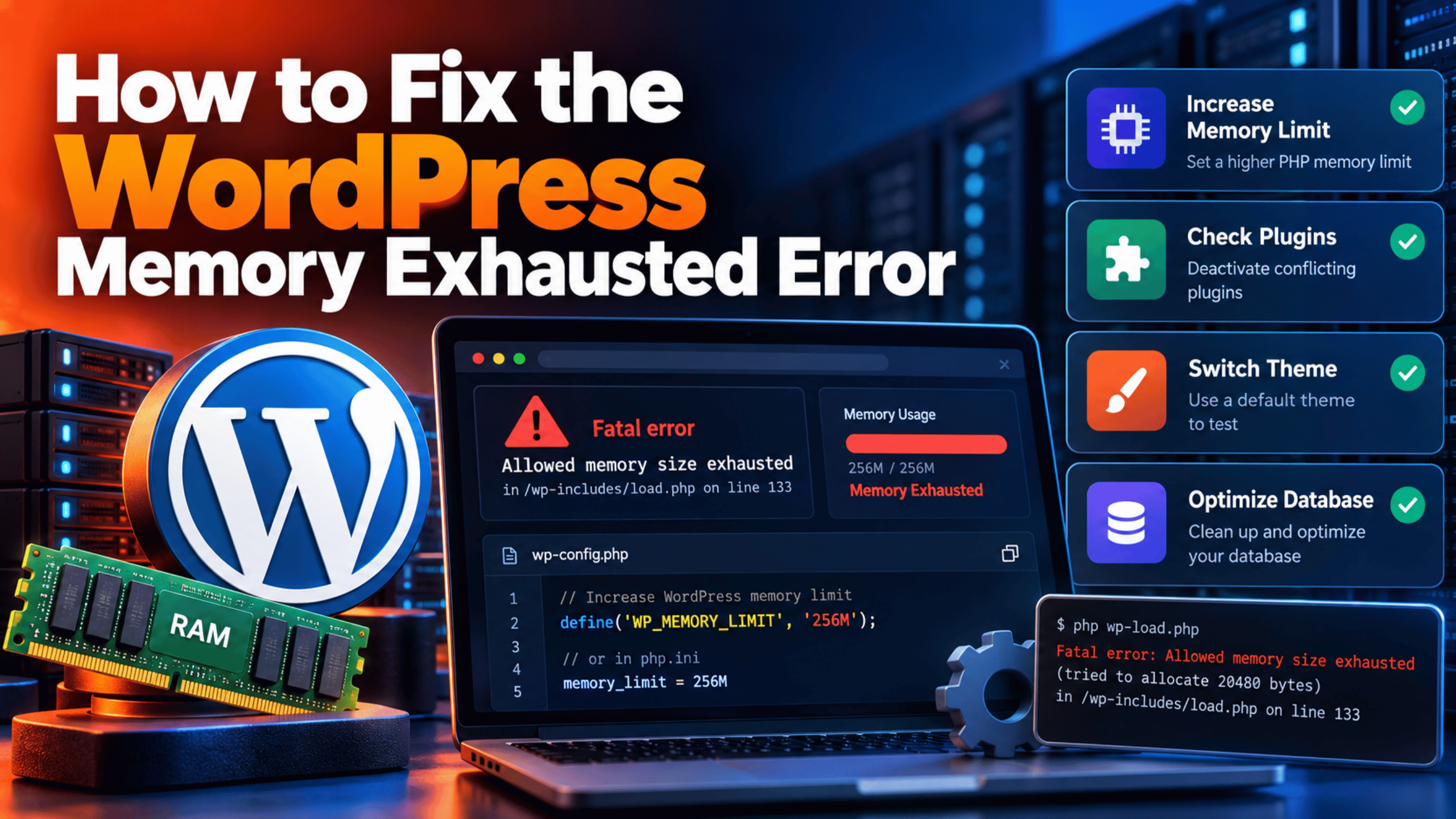
Fixing this means editing wp-config.php again, so keep that backup handy. Add this line above the “stop editing” comment:
define( 'WP_MEMORY_LIMIT', '256M' );Save the file and reload your site. Remember that this setting cannot beat your server’s own limit. If PHP is capped at 64MB by your host, WordPress cannot go above it. In that case, ask your host to raise the PHP memory limit for your account. Most will do it on request, and many allow it from the control panel.
Reload the page that was blank. If it loads, your fix worked. Do not stop there, though. Memory limits usually run out for a reason. Something on your site is using far more than it should, and step 5 will help you find it. If the page is still blank, move on.
Step 4: Undo Your Last File Edit
This step covers syntax errors in files you edited by hand. Files like functions.php and wp-config.php load before anything is printed. One missing semicolon there kills every page on the site. Pasting code after the final closing PHP tag causes the same thing. So does pasting it below the “stop editing” line in wp-config.php.
Confirm this is your cause with a simple question. Did the blank page start right after you pasted or edited code? If so, this is almost certainly it. Your debug.log will also name the file, with a line number and the words “syntax error” or “unexpected”.
Before you touch anything, download a copy of the file you are about to change. You will want a way back if the repair goes wrong. If the file is a theme file, remember that a theme update can overwrite it later anyway.
Now open the file over FTP or in your host’s file manager. Remove the code you added most recently. Save the file and reload your site. If it loads, your edit was the fault. Add the snippet back one piece at a time to find the broken line, and do that on a staging copy rather than on your live site.
If you cannot remember what you changed, check your host’s file dates. Sort the folder by date modified. The most recently changed file is your best suspect. If nothing here helps, move to the plugin test.
Step 5: Find the Plugin That Is Causing the Blank Page
This step covers plugin conflicts and broken plugin files. Plugins run inside the same PHP request as WordPress itself. A single fatal error in one of them stops the whole page. Two plugins can also clash by trying to define the same thing twice. An update that only half finished leaves a plugin with mismatched files.
Confirm plugins are involved before you start. If your debug.log names a path inside wp-content/plugins, you already have your answer. If the blank page began within minutes of an update, that is strong evidence too. A healthy result at the end of this test looks like a working site with all plugins off.
If your dashboard still loads, turn off every plugin at once from the plugins screen. If your dashboard is blank, you can do the same over FTP. Rename the wp-content/plugins folder to plugins-off. WordPress will not find any plugins and will switch them all off. Your settings are kept in the database, so nothing is lost.
Now reload your site. If it loads, a plugin was the cause. Rename the folder back to plugins. Then turn the plugins on one at a time, checking the site after each one. The plugin that brings back the blank page is your culprit.
Once you know which plugin it is, you have three choices. Leave it off and find a replacement. Reinstall it fresh, in case the files were damaged. Or contact the developer with the exact error line from your log. If reinstalling fails on its own, our guide to a failed WordPress plugin installation will help. If turning all plugins off changed nothing, your theme is next.
Step 6: Switch to a Default Theme to Test Your Theme
This step covers theme faults and bad theme edits. Your theme loads on every request, so one broken file in it breaks everything. Child themes add a second risk. If the parent theme removes a function in an update, the child theme calls something that no longer exists. That is a fatal error, and so a blank page.
Check this cause before you switch anything. Look in your debug.log for a path inside wp-content/themes. Also ask yourself whether the blank page started after a theme update or a design change. If both plugins and themes look innocent, come back and move on to step 7.
Switching theme changes how your site looks, so plan for that. Widget placement and some theme settings may not survive the round trip. Take a backup first, and do this on a staging copy if you can. If you cannot, pick a quiet hour for the test.
If your dashboard loads, switch to a default theme such as Twenty Twenty-Four from the themes screen. If your dashboard is blank, do it over FTP instead. Rename your active theme’s folder, and make sure a default theme folder is present. WordPress falls back to a default theme when the active one is missing.
Reload your site now. If it loads with the default theme, your own theme is the fault. Update it to the newest version, or reinstall it cleanly. If you edited its files, undo those edits. If the site is still blank with a default theme, your theme is cleared and you can move on.
Step 7: Finish or Roll Back a Failed Update
This step covers the half-finished update. WordPress replaces files one at a time during an update. If the process is cut short, your site is left with new files and old files side by side. The two sets expect different things from each other. That mismatch throws a fatal error on every request.
Confirm this is your cause by looking for leftovers. Check whether a .maintenance file still sits in your WordPress root folder. Its presence means an update stopped half way. Your debug.log may also show a function that does not exist, or a class that cannot be found. Both are classic signs of mixed file versions.
This step touches core files, so a backup is not optional here. Download a full copy of your site files before you begin, and export your database too. If your host offers staging, do the repair there and push it live afterwards.
Start by deleting the .maintenance file if you find one. Reload your site. If it loads but looks wrong, go to your dashboard and run the update again from the updates screen. Letting WordPress finish the job properly usually clears the mismatch. Our guide on a WordPress site stuck in maintenance mode covers that file in more depth.
If the site is still blank, move on to step 8 and replace the core files by hand. Check afterwards that the version number on your dashboard matches the version you expected. A mismatch there means the update still has not finished.
Step 8: Replace Core Files and Check File Permissions
This step covers missing core files and wrong permissions. PHP has to read every file it loads. If a core file is gone, or its permissions block reading, the load fails silently. Malware cleanups, bad migrations and interrupted transfers all cause this. The page goes blank with nothing written to explain why.
Check this cause first. Look in your WordPress root folder for wp-settings.php, wp-load.php and wp-blog-header.php. All three must be there. Then look at the permission numbers. Files normally read 644 and folders normally read 755. Anything much lower blocks reading, and anything much higher is a security risk.
Replacing core files is the riskiest step in this guide. Take a full backup of files and database before you touch anything. Never skip this part. If you have a staging site, do the whole repair there first.
Download a fresh copy of WordPress from the official site. Unzip it on your computer. Delete the wp-content folder from that copy, so your themes, plugins and uploads are untouched. Then upload the remaining files and folders to your site, overwriting what is there. Leave wp-config.php alone as well.
Reload your site after the upload. If it loads, a damaged core file was the problem. If your permissions looked wrong, ask your host to reset them to the standard values rather than changing them one by one. Hosts have tools that do this safely in seconds. If the page is still blank, one more cause remains.
Step 9: Clear OPcache and Restart PHP
This step covers stale compiled code. OPcache stores compiled PHP in memory so pages load faster. After you fix a file, the server may keep running the old broken copy from memory. Your repair is correct, but the symptom does not change. This is the cause that makes people think nothing is working.
Confirm this is your cause before acting. You will usually notice that a fix which should have worked made no difference at all. Another clue is a debug.log that keeps naming a line you have already removed. If the log matches your current files exactly, OPcache is not your issue.
Clearing it is low risk, but it does drop every compiled file at once. Your site will be slightly slower for a minute while PHP rebuilds its cache. Avoid doing it during a traffic peak if you can choose the timing.
Look in your hosting control panel for an option to restart PHP or flush the PHP cache. Many hosts put it beside the PHP version setting. Switching your PHP version and switching it back also clears the cache on many platforms. If you cannot find the option, ask your host to restart PHP for your account.
Reload your site once PHP has restarted. If it loads, the fault was already fixed and the cache was hiding it. If you reach the end of this step and the page is still blank, the cause is likely at server level. Share your debug.log with your host, or bring in a WordPress emergency support team who can read it for you.
Best Practices to Prevent the White Screen of Death in Future
Each cause above has a habit that stops it returning. Put these in place once and most blank pages never happen to you again.
Test updates on a staging site. This directly prevents the plugin, theme and failed-update causes. Most good hosts give you a one-click staging copy. Update there, click around the key pages, then push the change live. Ten minutes of testing beats an hour of recovery.
Keep automatic backups running. A backup does not stop a white screen, but it ends one in minutes. Keep daily copies of files and database, stored away from your server. Test a restore once in a while, because an untested backup is only a hope.
Never edit live files directly. This prevents the syntax error cause outright. Use a child theme for design changes. Put snippets in a small custom plugin rather than in functions.php. Edit in a code editor that flags missing brackets before you upload.
Give PHP enough memory from the start. This prevents the memory cause. Set WP_MEMORY_LIMIT to a comfortable value, and ask your host what the server cap is. Also remove plugins you no longer use, since every active plugin adds to the budget.
Keep PHP and WordPress current. Old PHP versions stop receiving fixes, and new plugin releases stop supporting them. Check your PHP version on the Site Health screen a few times a year. Upgrade on staging first, then live.
Watch your plugin count and quality. Fewer, better maintained plugins mean fewer conflicts. Before you install anything, check when it was last updated. Abandoned plugins are the most common source of fatal errors after a core update.
Configure caching carefully. This prevents the cached blank page. Exclude your dashboard and cart pages from caching. Clear the cache automatically after every deployment or update, so a broken copy is never kept.
Monitor your site properly. A blank page can return a normal success code, so a basic ping check may miss it. Use a monitor that checks for a word that should appear on your homepage. That way you hear about an empty page before your customers do.
Keep the log habit. Have a note of exactly how to switch WP_DEBUG_LOG on, ready to go. When something breaks, reading the log first saves you from guessing. Just remember to switch it off again afterwards.
Conclusion
The WordPress white screen of death looks far worse than it is. The signs are easy to read once you know them. An empty page source, a cut-off HTML file, a blank dashboard, or a site that only breaks when you are logged in. Each pattern narrows the search.
The causes come from a short and familiar list. A hidden PHP fatal error. An exhausted memory limit. A broken plugin or theme. A half-finished update. A hand-edited file. A cache, an OPcache, or a missing core file. Nine causes, and nothing more exotic than that.
The fix process follows the same order every time. Rule out caching. Turn on the debug log and read the real error. Raise memory. Undo your last edit. Test plugins, then the theme. Finish or roll back the update. Replace core files. Restart PHP. Back up before any step that touches a file, and use staging whenever you can.
Then build the habits that keep it away. Stage your updates, back up daily, stop editing live files, and give PHP room to work. If you are still staring at a blank page after step 9, do not keep guessing. Send your debug log to your host, or hand the job to a support team who reads these logs every day.

James is an experienced WordPress and WooCommerce specialist with over 10 years of practical experience. At WPChatSupport, he creates clear guides that help website owners fix WordPress issues, improve speed, secure their sites, and manage WooCommerce stores with confidence. His expertise includes store setup, plugin configuration, theme customization, payment gateway integration, and website troubleshooting. Through simple and helpful content, James supports users in solving technical problems and following best practices for online business growth.