Your web host keeps your server online. That is the core job. But when a plugin update breaks your checkout page, or malware starts redirecting your visitors, many owners hear the same reply: “That is outside our scope.” WordPress hosting support has real limits. This guide explains what those limits are, why they exist, and where to turn when your host cannot help. Knowing the line between host support and WordPress support saves you hours of frustration. It also helps you avoid downtime while you wait for the wrong team to answer. Let us walk through what your host will fix, what it will not, and how to close the gap.
What Web Hosting Support Actually Covers
Hosting support exists to keep the infrastructure healthy. Their team watches the server, the network, and the account. They handle the platform your site runs on, not the site itself. A typical host will help with problems like these:
- Server uptime, outages, and hardware failures.
- Basic PHP, MySQL, and memory limit settings.
- DNS records, nameservers, and SSL certificate installs.
- Account billing, disk space, and control panel access.
- Restoring a server-level backup, if your plan includes one.
These tasks matter. Without them, nothing else works. But notice the pattern. Every item lives at the server or account level. The moment a problem moves inside WordPress, the answer usually changes.
Why Hosting Support Stops at the Server
Hosts serve thousands of sites on shared systems. Their agents cannot learn every plugin, theme, or custom build. So they draw a clear line. They own the environment. You own the application. This split is written into most terms of service. Support covers the platform. It does not cover the code you install on top of it. That policy protects the host, keeps costs low, and lets their team scale. It also leaves a gap that catches many site owners by surprise. Think of your host like a landlord. The landlord fixes the plumbing and the power. If you rearrange the furniture and a shelf falls, that is your problem to solve. WordPress plugins, themes, and settings are your furniture.
7 WordPress Problems Your Host Usually Won’t Fix
Here are the issues that most often land outside hosting support. Each one is common, and each one can take your site down.
1. Plugin and Theme Conflicts
Two plugins fight over the same function. A theme update clashes with a page builder. Suddenly a page breaks or the editor freezes. Nearly every serious WordPress fault traces back to a plugin or theme. Your host will confirm the server is fine and then step back. Finding the exact conflict means deactivating plugins one by one and reading error logs. That is application work, not server work.
2. Malware Cleanup and Reinfection
Hosts scan for malware that threatens their network. They may suspend an infected account to protect neighbors. But cleaning the infection inside your files and database is usually your job. A proper cleanup removes the malicious code, patches the entry point, and hardens the site so it does not return. If you skip the last step, the infection often comes back.
3. Broken Updates and the White Screen
You click update, and the screen goes blank. The dreaded “white screen of death” appears, or a fatal error locks you out. The server is running fine, so the host has little to add. Recovery means enabling debug mode, spotting the failed file, and rolling back the change safely. A calm, tested process prevents a small update from becoming a long outage.
4. Custom Code and Functionality
Need a new field on your form? A tweak to how products display? A snippet in functions.php? Custom development sits far outside hosting support. One misplaced line can crash the whole site. This work needs a developer who understands WordPress hooks and can test changes without risk.
5. Performance Tuning Beyond the Server
Your host can add resources, but it will not optimize your site. Slow load times often come from heavy images, bloated plugins, render-blocking scripts, or a missing cache. Real speed work happens inside WordPress. It includes caching setup, image compression, database cleanup, and script control. Our WordPress performance optimization service targets exactly these layers.
6. WooCommerce and Checkout Issues
A failed payment or a broken cart is a revenue emergency. Yet the cause is often a plugin conflict, a gateway setting, or a theme template, not the server. Hosts rarely debug WooCommerce logic. You need someone who can trace the order flow and fix the exact break fast.
7. SEO, Redirects, and Content Problems
Broken permalinks, redirect loops, missing pages, and indexing errors all live inside WordPress. Your host will not touch your redirects or your SEO plugin settings. These fixes protect your traffic and rankings, so they need WordPress-specific care.
Managed Hosting Helps, But It Is Not a Support Team
Managed WordPress hosting closes part of the gap. These plans add automatic updates, built-in caching, daily backups, and stronger security scans. For many owners, that is a real upgrade over shared hosting. Still, managed hosting is not the same as a dedicated support team. It automates routine tasks. It does not sit with you when a custom plugin breaks or a checkout fails at midnight. When something unusual goes wrong, most managed hosts still point you back to a developer. We compare the two options in detail in our guide on managed WordPress hosting versus a support service. The takeaway is simple. Better hosting reduces how often things break. It does not replace the expert who fixes the things that still do.
Hosting Support vs WordPress Support at a Glance
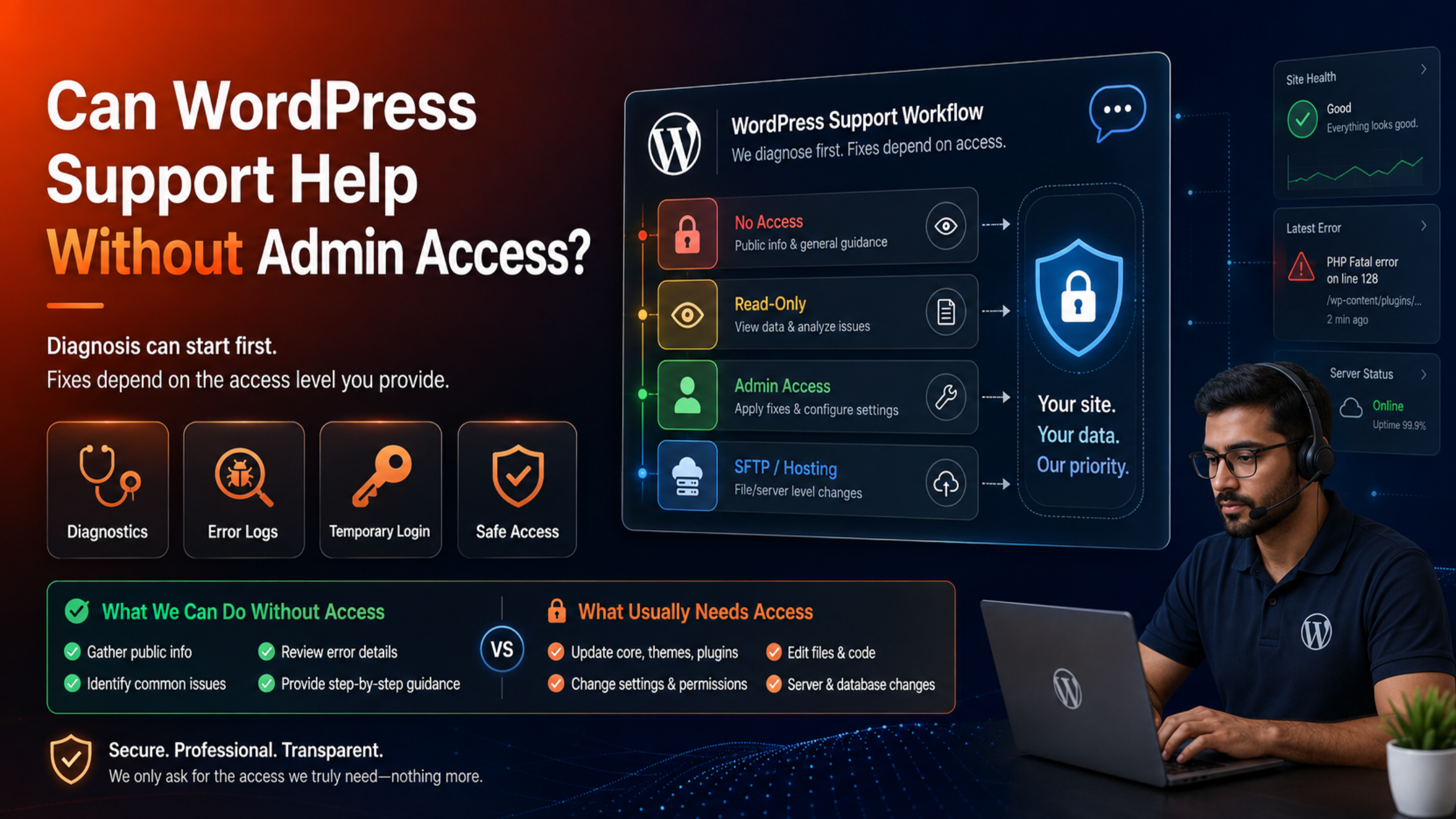
The difference comes down to one question: is the problem in the environment, or in the site? Use this simple test before you open a ticket. Hosting support is the right call when the whole server is affected. Signs include a total outage, a DNS or SSL error, an account or billing issue, or a message that the server itself is unreachable. These problems live below WordPress. WordPress support is the right call when the server is healthy but the site misbehaves. Signs include a broken page after an update, a plugin error, a checkout failure, malware, or a sudden speed drop. These problems live inside WordPress. When you match the symptom to the right team, you skip the ticket that gets bounced back. You reach the people who can actually fix it, and you cut your downtime in half. If you are unsure, a quick check with your host will confirm whether the server is fine, which points you straight to WordPress support.
What to Do When Your Host Says “Not Our Job”
When you hit the scope wall, stay calm and work through these steps.
- Back up first. Save a full copy of files and the database before you change anything. A backup turns a scary fix into a safe one.
- Read the error. Turn on WordPress debug mode to reveal the failing plugin, theme, or line of code.
- Test in isolation. Deactivate plugins and switch to a default theme to find the conflict. Reactivate one at a time.
- Do not guess on live. If money or traffic is at stake, avoid trial and error on the live site. Use a staging copy.
- Call WordPress experts. If the fix is unclear or urgent, bring in a team that works inside WordPress every day.
These steps protect your data and shorten downtime. They also make any expert’s job faster, because you arrive with useful clues instead of panic.
How a Dedicated WordPress Support Service Fills the Gap
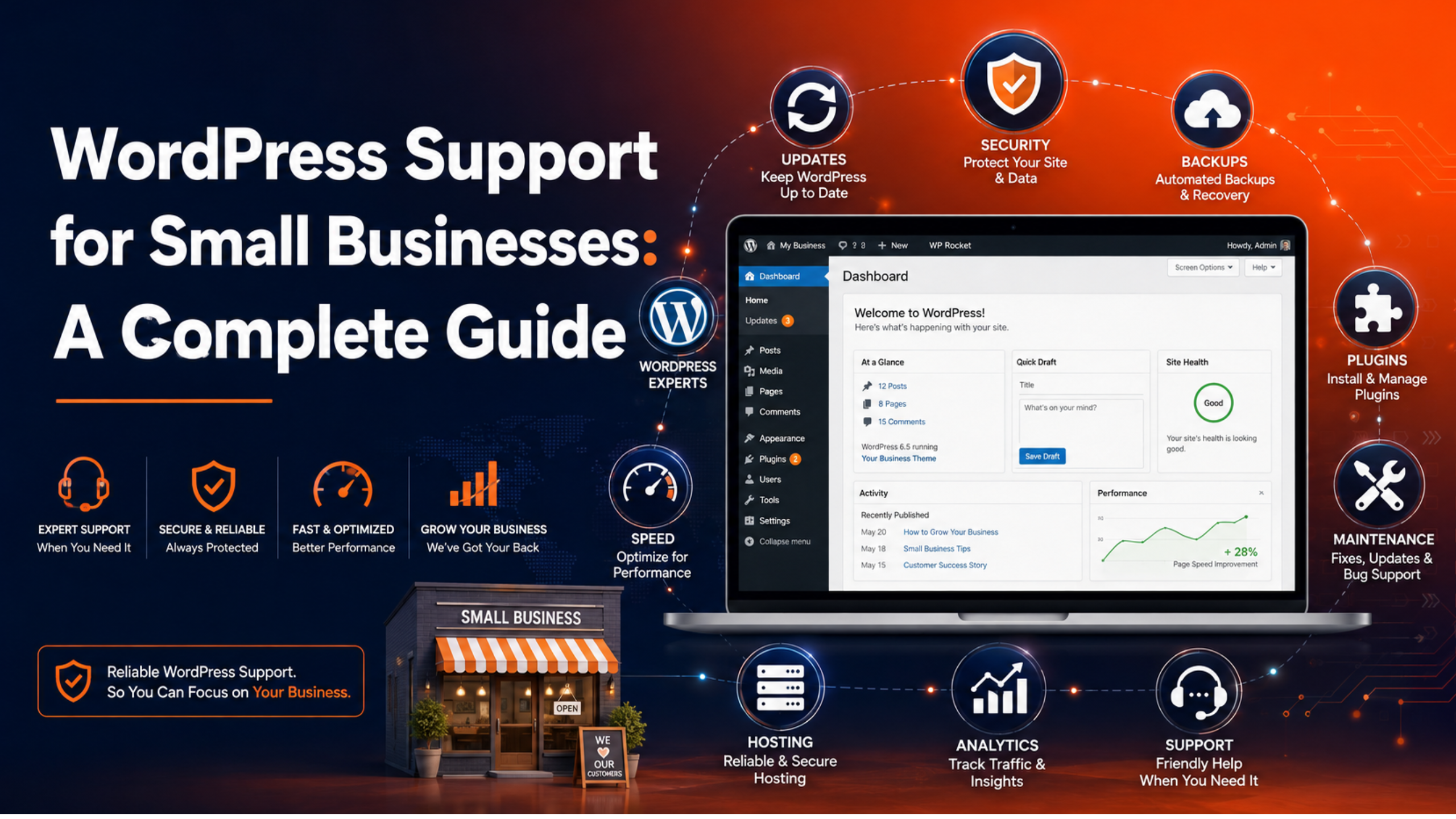
A dedicated WordPress support service starts where hosting support ends. The team knows plugins, themes, WooCommerce, and custom code. They fix the problem inside your site, not just around it. Good support covers the whole application layer, including tasks like these:
- Diagnosing and resolving plugin and theme conflicts.
- Cleaning malware and hardening the site against return visits.
- Recovering from broken updates and fatal errors.
- Building safe custom features and edits.
- Tuning speed inside WordPress, not just on the server.
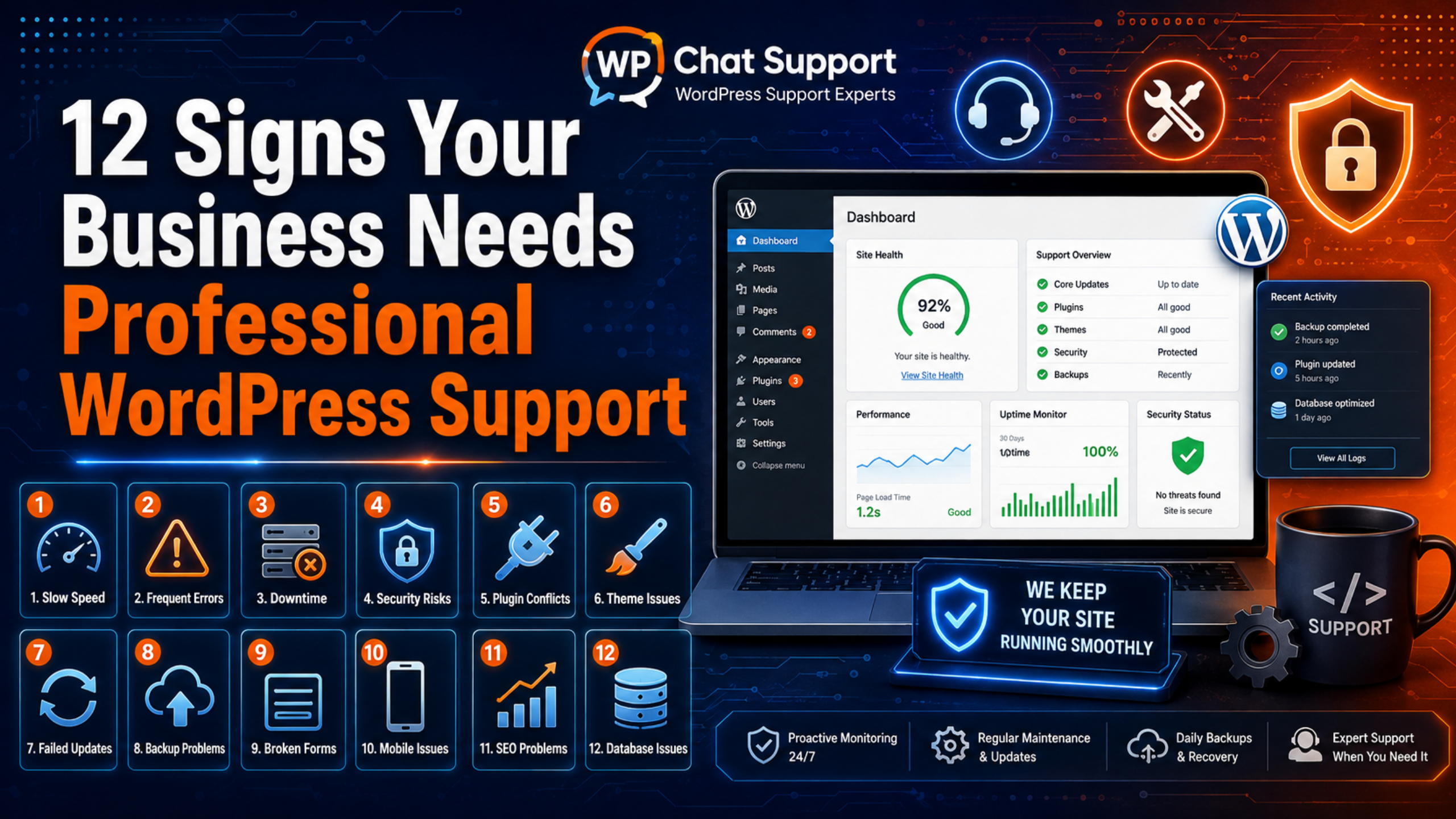
The best providers also add a real safety net. A tested safe update pipeline means updates get checked on a staging copy before they touch your live site. And when something breaks at a bad hour, instant live chat support connects you to a human who can act now. To see the full range of tasks these teams handle, read our overview of what WordPress support can fix. If you are still unsure whether it is time to get help, our companion guide on the signs your business needs professional WordPress support lays out the warning signals to watch.
Frequently Asked Questions
Will my host fix a plugin that breaks my site?
Usually no. Your host confirms the server is healthy, but plugin conflicts sit inside WordPress. That work falls to you or a WordPress support team.
My host found malware. Do they remove it?
Often they only flag it or suspend the account to protect their network. Full cleanup, patching the entry point, and hardening the site are usually your responsibility.
Is managed WordPress hosting enough on its own?
It helps a lot. It automates updates, backups, and caching. But it still does not debug custom code or handle unusual failures, so many owners pair it with a support service.
Who should I call first when my site goes down?
Check with your host to rule out a server outage. If the server is fine, the issue lives in WordPress, and a WordPress support team is the faster route to a fix.
Conclusion
Your host has one clear mission: keep the platform running. It does that well. But plugin conflicts, malware, broken updates, custom code, and speed problems all live inside WordPress, and those sit outside standard hosting support. Once you understand the line, you stop waiting on the wrong team. You back up, gather clues, and bring the right expert in fast. Pair solid hosting with a dedicated WordPress support service, and almost any problem has a clear owner and a quick path to resolution. That is how you keep your site online, secure, and ready for growth.
James is an experienced WordPress and WooCommerce specialist with over 10 years of practical experience. At WPChatSupport, he creates clear guides that help website owners fix WordPress issues, improve speed, secure their sites, and manage WooCommerce stores with confidence. His expertise includes store setup, plugin configuration, theme customization, payment gateway integration, and website troubleshooting. Through simple and helpful content, James supports users in solving technical problems and following best practices for online business growth.