Table of Contents
-
- Introduction
- What is the SEMrush Keyword Magic Tool?
- Importance of Keyword Research in SEO & PPC Success
- What You Can Do with SEMrush Keyword Research Tool
- How SEMrush Keyword Magic Tool Helps SEO Marketers
- How SEMrush Keyword Magic Tool Benefits PPC Marketers
- Master SEMrush Keyword Magic Tool with This Step-by-Step Guide
- Pros and Cons of SEMrush Keyword Magic Tool
- SEMrush Keyword Magic Tool vs Other Keyword Research Tools
- Expert Tips for Maximizing SEMrush Keyword Magic Tool
- Final Thoughts
Introduction
PPC and SEO success are based on keyword research. Without the right keywords, campaigns struggle to reach the right audience. Businesses spend time and money but fail to get results. That is why marketers rely on trusted tools for keyword planning.
Among these vital tools is the SEMrush Keyword Magic Tool. It helps SEO experts, PPC marketers, and content creators find powerful keywords. These keywords improve website rankings and boost ad campaign performance. The tool simplifies keyword research with accurate data and easy filters.
Today, millions of marketers worldwide use SEMrush for planning their strategies. From small businesses to global brands, it fits every marketing need. We shall discuss the reasons behind its effectiveness in this essay. We’ll also look at its potential applications for PPC and SEO growth.
What is the SEMrush Keyword Magic Tool?
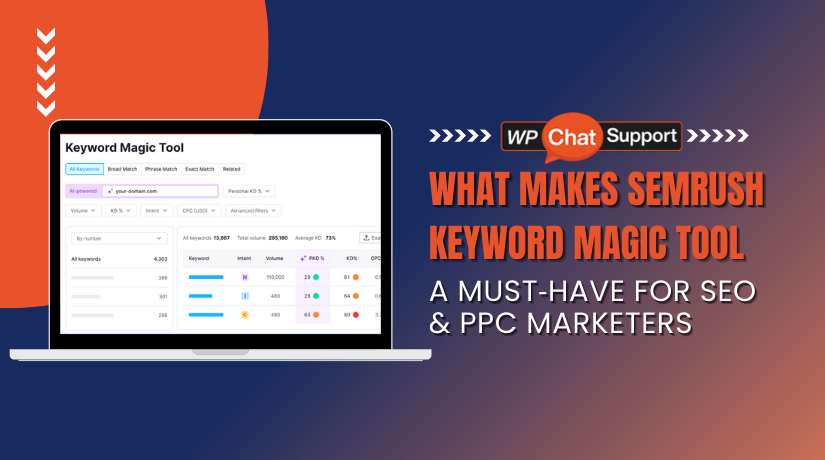
The SEMrush platform includes a function called the SEMrush Keyword Magic Tool. It functions as a sophisticated SEMrush keyword research tool. It lets users identify keywords for sponsored advertisements, blogs, and webpages.
Marketers use it because it combines accuracy, speed, and depth. The database includes more than 25 billion keywords across 130 countries. This makes it one of the largest keyword databases in the world. You can rapidly obtain thousands of results by searching for any seed term.
The tool also provides search volume, keyword difficulty, CPC, and intent. This helps users understand which keywords are worth targeting. For example, an SEO professional can find long-tail keywords with low difficulty. A PPC marketer can select high-converting keywords with good CPC value.
It is made for both novices and professionals. The user interface is clear and easy to use. To use it efficiently, you don’t require technical expertise. It works for everyone, whether you manage an agency, an eCommerce company, or a blog.
Features of SEMrush Keyword Magic Tool
-
-
- Keyword grouping for organized clusters by themes or topics.
- Search intent detection (informational, commercial, navigational, transactional).
- Advanced filters for KD, CPC, volume, and SERP features.
- Competitor insights to track rival keyword strategies.
- Keyword difficulty score to measure ranking challenges.
- SERP analysis to study current top-ranking pages.
- Local keyword research for country, region, or city targeting.
- Historical data to monitor the evolution of keyword trends.
-
Importance of Keyword Research in SEO & PPC Success
Keyword research is the first step in building any digital strategy. Without it, SEO and PPC campaigns cannot deliver strong results. It’s not only about identifying highly trafficked words. It’s about learning what people want, how they search, and how to get in front of them.
Connects Businesses with Target Audiences
When businesses use the appropriate keywords, they show up where customers are looking. Someone who searches for “best running shoes for women,” for instance, is more likely to make a purchase. Using this keyword connects your product directly with that audience. Without this match, your website may remain invisible.
Drives Organic Traffic Consistently
Strong keywords improve rankings in search engines like Google. Higher rankings bring free, continuous visitors to your site. Budget pauses do not affect organic traffic, in contrast to paid advertisements. Because of this, one of the most economical marketing strategies is SEO keyword targeting.
Improves Conversions and Sales
Keyword research does more than bring visitors. It also improves conversions. When users find exactly what they searched for, they are more likely to act. For example, targeting “affordable SEO services in New York” is more powerful than just “SEO.”
Powers PPC Campaigns Effectively
Paid ads rely completely on keyword targeting. Keywords decide when your ad appears and to whom. Using broad terms wastes money on unqualified clicks. Using specific keywords narrows your audience and improves ad performance. With SEMrush keyword analysis, you can select terms that maximize ROI.
Saves Marketing Budget
Unresearched keywords can burn a marketing budget very fast. Ads may show to people who will never buy. SEO efforts may target impossible words with high competition. A SEMrush keyword research tool helps avoid these risks by showing accurate metrics like CPC and difficulty.
Supports Small Businesses Against Larger Brands
Small businesses cannot always compete on broad terms. For example, ranking for “shoes” is impossible for a new store. But “handmade leather shoes in Chicago” is achievable. Long-tail keywords open doors for smaller brands to attract buyers directly.
Identifies Seasonal and Trending Opportunities
Search behavior changes throughout the year. During holidays, “Christmas gift ideas” keywords rise. In summer, “best travel destinations” may trend. Keyword research identifies these shifts early. Businesses can adjust campaigns and capture timely demand.
Provides Competitive Advantage
Knowing which keywords competitors target is a huge advantage. If they rank for “digital marketing tools,” you can find related terms. With SEMrush Keyword Magic Tool, you can spot gaps in their strategy. You can then create content or ads to capture that missed audience.
Builds Long-Term Content Strategies
Keyword research lays the foundation for blog posts, landing pages, and clusters. Every piece of content is guaranteed to target a legitimate search query. In the long run, this builds a library of useful resources and avoids wasted effort.
What You Can Do with SEMrush Keyword Research Tool
The SEMrush Keyword Magic Tool is not just about finding keywords. It is a complete solution that allows marketers to turn data into action. With this tool, you can move beyond simple keyword research and build powerful strategies for SEO and PPC campaigns. Here are the detailed things you can do:
Find Profitable Keywords
The tool helps you identify high-volume and profitable keywords quickly. These are the terms your audience is searching for the most. By targeting them, you can increase traffic and improve your website’s visibility. This makes the SEMrush keyword research tool perfect for businesses that want growth.
Discover Long-Tail Keywords
Not all users search with short phrases. Many use long-tail keywords to ask questions or describe needs. The tool finds these hidden opportunities easily. Long-tail terms usually have lower competition and higher conversion rates. This makes them perfect for blogs, niche pages, and landing pages.
Identify Negative Keywords for PPC
In paid campaigns, targeting the wrong keyword wastes money. The SEMrush keyword analysis feature helps spot negative keywords. These are irrelevant terms that do not bring leads. By excluding them, you save budget and improve ad performance. This leads to more efficient campaigns.
Build Keyword Clusters for Content Strategies
Content needs structure to rank better. The SEMrush Keyword Magic Tool groups related terms automatically. You can build keyword clusters for a single topic. Each cluster can support multiple articles or landing pages. This approach improves topical authority and builds stronger SEO visibility.
Export Keyword Lists for Teams
Keyword research is often a team activity. You can export keyword lists from the program in CSV or Excel formats. This facilitates data sharing with PPC managers, writers, and SEO specialists. The structured keyword set is the same for everyone to use.
Align Keywords with Search Intent
Search intent is critical in modern SEO. Users search for information, products, or services differently. For every keyword, the SEMrush keyword research tool displays intent labels. You can create content or ads that match exactly what users want. This increases engagement and conversions.
Plan Content Calendars Easily
Marketers often struggle to organize blog topics and landing pages. With keyword groups, you can plan content calendars in advance. Each keyword cluster becomes a topic for a post or campaign. This keeps your strategy consistent and data-driven.
Optimize PPC Campaigns with Data
The tool provides detailed CPC and competition metrics. You can select the right keywords for bidding. By doing this, you can make sure the right people see your advertisements. More conversions and higher click-through rates are the results of improved targeting.
Track Trending and Seasonal Keywords
Search behavior changes with seasons and events. The SEMrush Keyword Magic Tool shows historical data and trending terms. This helps you capture timely opportunities. For example, holiday-related searches or industry trends can be targeted early. Acting fast ensures your campaigns stay ahead of competitors.
Support Both SEO and PPC Together
Most tools focus on either SEO or PPC. This tool supports both. You can use the same keyword data to optimize blogs, landing pages, and ads. Combining insights saves time and creates a unified marketing strategy.
How SEMrush Keyword Magic Tool Helps SEO Marketers
The SEMrush Keyword Magic Tool makes SEO work smarter and faster. It provides features that help marketers build stronger strategies. Here’s how it supports SEO professionals:
Find Untapped Long-Tail Keywords
Long-tail keywords have less competition and stronger conversion potential. The tool highlights these terms to improve organic reach.
Build Content Clusters With Ease
The tool groups related keywords together. Marketers can create content clusters for better topical authority.
Map Keywords to Buyer Stages
With SEMrush keyword research tool, you can match keywords to awareness, consideration, or decision stages.
Optimize on-Page Seo With Precision
Each keyword comes with data like difficulty, volume, and CPC. This makes on-page optimization easier and data-driven.
Use Semantic Keyword Suggestions
SEMrush keyword analysis provides related terms. Adding these improves relevance and search visibility.
Study Competitor Strategies
The tool shows which keywords competitors rank for. This helps marketers design smarter SEO campaigns.
Track Keyword Trends Over Time
Historical data reveals seasonal and long-term trends. Marketers can adjust strategies for maximum impact.
In short, SEO professionals get accurate insights, stronger planning, and improved results using the SEMrush Keyword Magic Tool.
How SEMrush Keyword Magic Tool Benefits PPC Marketers
PPC campaigns need accurate targeting and strong keyword data. The SEMrush Keyword Magic Tool helps advertisers manage campaigns with confidence. Here’s how it benefits PPC marketers:
Discover High-Value Keywords for Ads
The tool highlights keywords with strong CPC and conversion potential. Advertisers can focus on terms that drive sales.
Create Effective Ad Groups
Keyword grouping allows structured ad campaigns. This improves ad relevance and lowers CPC.
Identify Negative Keywords Easily
Marketers can weed out useless terms with the SEMrush keyword research tool. This boosts ROI and reduces budget.
Spot Low-Cost, High-Conversion Opportunities
Some keywords have low volume but excellent conversion rates. The tool makes them easy to find.
Track Competitor PPC Strategies
SEMrush keyword analysis shows which terms competitors bid on. Advertisers can adjust their strategy accordingly.
Run geo-targeted campaigns
Marketers can research local keywords. This ensures ads reach specific regional audiences.
Match Ads With User Intent
Keywords are labeled by intent: informational, commercial, or transactional. PPC campaigns become more targeted.
Plan Seasonal Keyword Campaigns
The tool tracks keyword spikes during seasonal events. Advertisers can time their ads for higher performance.
With these features, the SEMrush Keyword Magic Tool ensures PPC campaigns deliver higher ROI and better targeting.
Master SEMrush Keyword Magic Tool with This Step-by-Step Guide
Many marketers believe that researching keywords is difficult. The procedure is made easy, transparent, and efficient using the SEMrush Keyword Magic Tool. Its steps can be easily followed by anyone. Here’s how to apply it:
Step 1: Log into Your Semrush Dashboard
Open your SEMrush account and go to the Keyword Magic Tool under the keyword research section. The interface is clean and user-friendly.
Step 2: Enter a Seed Keyword
Type a broad keyword relevant to your business or niche. For example, use “digital marketing,” “fitness tips,” or “buy laptops online.” The SEMrush keyword research tool will generate thousands of related results instantly.
Step 3: Explore Keyword Groups and Subgroups
The tool organizes results into groups and subgroups. This structure makes it easy to find variations and related ideas. It helps you identify long-tail terms for blogs or ads.
Step 4: Apply Advanced Filters
Use filters to narrow your results. Adjust by keyword difficulty (KD), CPC, search volume, or SERP features. For SEO, focus on medium-difficulty keywords. For PPC, target high CPC terms with strong buyer intent.
Step 5: Check Search Intent Distribution
Every keyword is labeled with intent: informational, navigational, commercial, or transactional. This feature of SEMrush keyword analysis ensures you match the right keyword with the right content or ad campaign.
Step 6: Review Competitor Serp Results
The tool also shows which websites rank for those keywords. This helps you study competitors and understand the type of content that performs well. It also reveals gaps you can target.
Step 7: Export Your Keyword Lists
You can export chosen keywords into CSV or Excel files. These files are ready to use in SEO strategies, blog outlines, or PPC ad groups.
Step 8: Implement Keywords into Campaigns
Use the exported keywords for blogs, landing pages, or advertisements. Assign clusters to different types of content. For example, use one cluster for informational blogs and another for product-focused pages.
Step 9: Track and Refine Results
After using the keywords, monitor performance. The SEMrush Keyword Magic Tool works best when you refine your keyword list regularly. Update campaigns based on changing trends and competitor shifts.
By following these steps, marketers get full value from the tool. The process is straightforward, effective, and suitable for both beginners and experts. You can create plans based on actual data and eliminate guessing with SEMrush keyword analysis.
Pros and Cons of SEMrush Keyword Magic Tool
Pros
-
-
- The tool offers one of the largest keyword databases globally. SEMrush reports over 25+ billion keywords across 140+ countries.
- Accurate CPC and competition metrics help PPC marketers control their ad spend.
- Advanced filtering options allow quick results by volume, KD, or CPC.
- It supports both SEO and PPC campaigns in one interface.
- Export features make data sharing fast and efficient.
- Built-in competitor keyword analysis provides strategic insights.
-
Cons
-
-
- The tool is not free, and smaller businesses may find the cost high.
- Beginners may face a learning curve because of the many features.
- Some advanced keyword reports require a higher SEMrush subscription tier.
-
Even with these drawbacks, the SEMrush keyword research tool remains one of the most trusted options for professionals.
SEMrush Keyword Magic Tool vs Other Keyword Research Tools
Many marketers compare the SEMrush Keyword Magic Tool with other platforms before investing. Each tool has strengths, but SEMrush often delivers broader and deeper insights.
-
-
- Google Keyword Planner – It is free and widely used. However, it provides limited data compared to SEMrush. Google’s tool focuses more on ads, while SEMrush gives a detailed keyword analysis for SEO and PPC together.
- Ahrefs – Known for backlinks and competitor analysis. Its keyword database is smaller than SEMrush, which makes SEMrush better for global keyword research.
- Moz Keyword Explorer – It is simple and good for beginners. However, it lacks advanced filters and CPC data.
- Ubersuggest – A budget-friendly option, but it cannot match SEMrush in accuracy or competitor insights.
-
Unique Advantages of SEMrush Keyword Magic Tool
-
-
- Access to the largest keyword database available.
- Search intent classification to identify informational, commercial, or transactional queries.
- Detailed competitor keyword tracking.
- Advanced local keyword research by country, state, or city.
- Combines both SEO and PPC tools in one platform.
-
This combination makes the SEMrush keyword research tool more powerful than most competitors. Businesses using it can plan smarter campaigns and gain a real edge.
Expert Tips for Maximizing SEMrush Keyword Magic Tool
It is one thing to own the tool, but it is quite another to use it well. Here are some useful pointers for maximising SEMrush’s keyword analysis capabilities.
Use Intent Filters Visely: Every keyword has a purpose. Match your keyword with user intent to improve conversion rates.
Build Topic Clusters: Group keywords around a single theme to improve topical authority. This strategy helps your content rank higher in search engines.
Refresh Keyword Lists Regularly:Trends change fast. Updating your research ensures that your campaigns remain relevant.
Combine SEO and PPC Data: A term that performs well in ads may also work for organic campaigns. Aligning both channels creates a consistent strategy.
Focus on Long-Tail Keywords: These terms may bring lower traffic but usually convert at a higher rate.
Track Seasonal Keywords: For example, “holiday gift ideas” will peak in December. Planning for these terms ensures your campaigns are timely.
Monitor Competitors Often: Use SEMrush to see when competitors shift their keyword strategy. This insight helps you react quickly and stay ahead.
When applied correctly, these tips unlock the full potential of the SEMrush Keyword Magic Tool.
Final Thoughts
Keyword research is the heart of every digital marketing strategy. Without proper research, businesses risk targeting the wrong audience or wasting resources. This is why tools like the SEMrush Keyword Magic Tool are essential. They give clarity, accuracy, and direction to every campaign.
The tool offers a huge database, covering billions of search queries worldwide. With such depth, marketers can explore new markets and expand their reach. Unlike free tools, it provides data you can trust, making campaign planning more reliable.
The SEMrush keyword research tool is not just about finding words. It is about understanding user intent, spotting opportunities, and staying ahead of competitors. From discovering long-tail terms to identifying seasonal trends, it helps build strategies that last.
The ability to integrate PPC and SEO data is another significant benefit. While most programs only concentrate on one channel, SEMrush allows for both. Teams may now develop cohesive strategies that optimize visibility across both paid and organic search.
The platform also offers detailed SEMrush keyword analysis, showing competition levels, CPC values, and SERP insights. With this knowledge, marketers may steer clear of wasteful spending and make wiser choices.
Yes, the tool requires a paid subscription, but the value is unmatched. The time saved, the accuracy provided, and the improved campaign results easily justify the price. For agencies, it also strengthens client reporting, showing clear results backed by data.
In today’s competitive digital world, guessing is no longer an option. Businesses must use data-driven tools to stay relevant and successful. The SEMrush Keyword Magic Tool makes this possible with precision and consistency.
If you want higher rankings, smarter PPC campaigns, and long-term growth, this tool is a must-have. It does more than generate lists — it helps shape strategies. For digital marketers and businesses serious about results, the SEMrush keyword research tool is not just helpful. It is essential.

James is an experienced WordPress and WooCommerce specialist with over 10 years of practical experience. At WPChatSupport, he creates clear guides that help website owners fix WordPress issues, improve speed, secure their sites, and manage WooCommerce stores with confidence. His expertise includes store setup, plugin configuration, theme customization, payment gateway integration, and website troubleshooting. Through simple and helpful content, James supports users in solving technical problems and following best practices for online business growth.