
Table of Contents
-
- Introduction
- What Is the SEMrush Keyword Overview Tool?
- Importance of the Keyword Overview Tool in SEMrush
- Understanding the Features of SEMrush Keyword Overview Tool
- How to Use SEMrush Keyword Overview Tool (Step-by-Step Guide)
- Pros and Cons of the SEMrush Keyword Overview Tool
- Practical Guide: Tips for Using the Tool Effectively
- Conclusion
Introduction
SEO and digital marketing success are based on keyword research. Sites cannot engage with their target audience if they don’t use the appropriate keywords. In order to comprehend and appropriately rank content, search engines rely on keywords. This makes keyword planning a critical step in building an online presence.
These days, one of the most reliable options is the SEMrush keyword tool. It offers marketers, bloggers, and businesses a clear way to discover opportunities. The tool provides insights that go beyond simple search counts. It uncovers hidden chances, competitor data, and search intent.
The keyword overview SEMrush feature gives users a complete keyword snapshot. It displays SEMrush keyword volume, SEMrush keyword difficulty, competition levels, and live trends. These keyword metrics help you understand if a keyword is worth targeting. For instance, a term with a large volume and little competition has a higher probability of ranking.
The SEMrush keyword research process is simple but highly effective. By entering a single keyword, users receive a full analysis. Additionally, the program recommends long-tail keywords, related terms, and variations. This helps in building a diverse content strategy.
Unlike free alternatives, SEMrush provides reliable and updated data. Its SEMrush keyword planner gives both global and local insights. It also highlights seasonal SEMrush keyword trends that guide smarter publishing schedules.
How to use the SEMrush Keyword Overview tool efficiently is explained in this post. It covers features, benefits, and best practices. With these insights, you can strengthen your SEO plan. The goal is to make keyword research easy, accurate, and practical.
What Is the SEMrush Keyword Overview Tool?
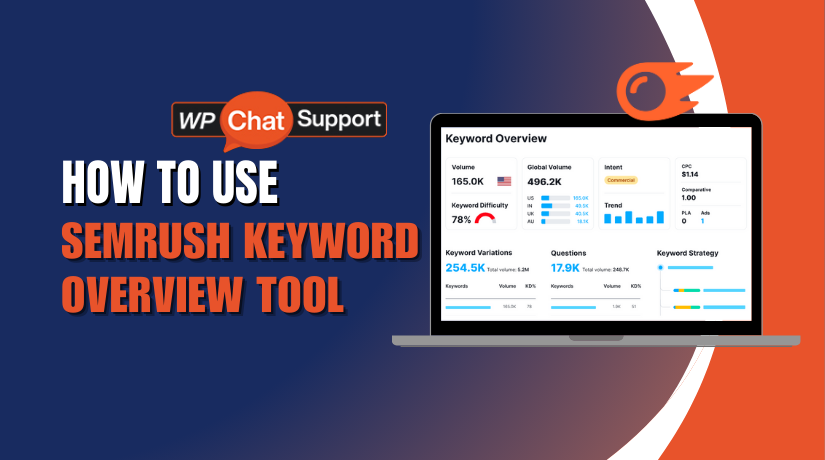
The SEMrush Keyword Overview tool is designed to analyze any keyword. It provides deep SEMrush keyword analysis within seconds. Simply type a keyword into the tool, and it will display helpful information. This data includes SEMrush keyword volume, SEMrush keyword difficulty, competition level, and trend history.
The tool also shows which domains are already ranking for that keyword. This makes it easier to study competitors and understand the search landscape. Unlike free tools, SEMrush offers reliable keyword metrics that guide smarter decisions.
There is more than simply data in the SEMrush keyword. It assists in determining each keyword’s user intent. For exampleool , whether people are searching to buy, learn, or compare. Knowing this intent allows businesses to create better-targeted content.
Importance of the Keyword Overview Tool in SEMrush
The SEMrush Keyword Overview Tool has numerous benefits. The primary advantages are detailed below.
Accurate SEMrush Keyword Metrics
The tool provides reliable keyword data that free tools often miss. Metrics like SEMrush keyword volume, CPC, and competition are always updated. This accuracy makes planning strategies more effective.
Clear Keyword Difficulty Scores
The SEMrush keyword difficulty score shows how tough ranking will be. Beginners can focus on low-difficulty terms for quicker wins. Advanced marketers can take on competitive keywords with high authority.
Insight into SEMrush Keyword Competition
The tool highlights who is already ranking for a keyword. This SEMrush keyword competition insight helps identify strong rivals. It also shows which domains are beatable with better content.
Tracking SEMrush Keyword Trends
A keyword’s popularity can be determined by looking at trends. For example, “AI tools” searches may rise every month. Using SEMrush keyword trends, you can plan campaigns at the right time.
Discovering Related Keywords
The overview suggests variations and long-tail options. This strengthens your keyword strategy by covering multiple searches. It makes SEMrush keyword research more complete and effective.
Local and Global Keyword Insights
The SEMrush keyword planner provides data for different countries. Businesses can target local or international audiences with confidence. Global data is especially useful for expanding into new markets.
Strong Support for Content Planning
Every metric in the overview supports smarter content creation. Writers know what to target and how difficult it will be. This eliminates guesswork and increases chances of success.
Time-Saving and User-Friendly
The tool saves time by giving all keyword data in one place. It is simple to use, even for beginners. This makes how to use SEMrush Keyword Overview tool easy for everyone.
Understanding the Features of SEMrush Keyword Overview Tool
One of the best tools for SEO is the SEMrush keyword tool. It helps marketers, bloggers, and businesses find keywords that drive traffic. The Keyword Overview SEMrush section shows complete details about any keyword you enter. From search volume to competition, every important detail is available in one place. Let us go through the main features in detail.
SEMrush Keyword Volume
The SEMrush keyword volume metric shows how many times users search a keyword monthly. This information assists you in selecting terms that people actually enter into Google. If a keyword receives 10,000 searches per month, for instance, it is in great demand. Keywords with low volume can nevertheless convert well even though they may attract fewer visits. Volume data guarantees that the terms you target are important.
SEMrush Keyword Difficulty
The SEMrush keyword difficulty score tells how hard it is to rank. This number is given as a percentage, where higher values mean more competition. If a keyword has 80% difficulty, ranking is very tough. A keyword with 40% difficulty is easier to target. Using this score helps you plan smart SEO strategies. You can balance easy and hard keywords for growth.
SEMrush Keyword Competition
The SEMrush keyword competition metric compares how many sites fight for a keyword. This shows the strength of competitors already ranking for it. If competition is very high, new websites may struggle to rank. If competition is low, smaller sites can take advantage. This feature is useful for spotting profitable opportunities with less effort.
SEMrush Keyword Trends
The SEMrush keyword trends graph illustrates the evolution of a keyword’s popularity over time. It highlights seasonal spikes, sudden popularity, or steady decline. For example, “Christmas gifts” will show high spikes in December. Businesses can use this data to prepare content before demand increases. Following trends gives a big advantage in planning content calendars.
SEMrush Keyword Metrics Overview
The SEMrush keyword metrics section includes CPC (cost per click), search intent, and SERP features. CPC shows how much advertisers pay per click for ads. High CPC usually means strong business value for that keyword. Users’ search purpose indicates if they wish to compare, learn, or buy. SERP features include snippets, images, or shopping results. These details help you target the right audience effectively.
Related Keywords and Variations
The SEMrush keyword tool also suggests related terms and keyword variations. This helps expand your SEMrush keyword research beyond just one keyword. For example, searching “SEO tools” may suggest “best SEO software” or “free SEO tools.” Adding variations helps create content that covers more searches. It also boosts chances of ranking for long-tail keywords.
SERP Analysis and Competitor Insights
The SEMrush keyword analysis includes a SERP breakdown of top-ranking pages. You can see which websites hold strong positions for your keyword. This reveals competitor strength and their backlink profiles. If top results are big brands, ranking may be hard. If smaller blogs rank, you may have a chance to compete. Competitor insights save time and guide your SEO direction.
Global and Local Keyword Data
The SEMrush keyword planner shows data for multiple regions and countries. This is very useful for businesses targeting local or global audiences. For example, a keyword may have 20,000 searches in the US but only 2,000 in India. Localised methods are aided by knowledge about area demand. Businesses venturing into new markets need this functionality.
Historical Keyword Data
The tool also stores historical keyword trends for deeper research. You can check how a keyword performed months or years ago. If the keyword shows growth, it may be a future opportunity. If it declines, you can avoid wasting resources. Historical data gives a clear long-term view of keyword value.
Keyword Intent Analysis
The keyword overview SEMrush also tells you the intent behind a keyword. It can be informational, commercial, transactional, or navigational. For example, “buy iPhone 15 online” has transactional intent. “Best smartphones 2026” has informational intent. Understanding intent ensures you create the right type of content. Matching search intent improves ranking chances and user satisfaction.
How to Use SEMrush Keyword Overview Tool (Step-by-Step Guide)
The SEMrush keyword tool is among the most reliable SEO platforms. Businesses, bloggers, and marketers can use it to identify lucrative keywords. The keyword overview SEMrush feature gives a complete picture of a keyword’s potential. You can see search volume, competition, trends, and ranking difficulty. This part will guide you through how to use SEMrush Keyword Overview tool step by step.
Step 1: Log Into SEMrush
To begin, you need access to the platform. Visit the SEMrush website and log in with your account. If you are new, you can start with the free trial. A free account has limits, but it still offers basic keyword data. Paid users can enjoy complete SEMrush keyword research features and deeper keyword metrics.
Step 2: Enter a Keyword in the Search Bar
Find the top search bar once you’re inside. Enter the keyword that you wish to examine. For example, you may type “best running shoes” or “SEO tips.” After pressing enter, the keyword overview SEMrush page will open.
This section provides immediate insights. You will see SEMrush keyword volume, keyword difficulty, and keyword competition. The overview also highlights global and local search data. This helps you understand how the keyword performs across different markets.
Step 3: Review Keyword Metrics
The SEMrush keyword tool gives detailed data for every keyword. Let’s break down the key SEMrush keyword metrics you will see:
-
-
- Search Volume: displays the typical monthly number of searches for the term.
- Keyword Difficulty: Displays how hard it is to rank for the keyword.
- Keyword Competition: Indicates how competitive the keyword is in paid campaigns.
- Cost per Click (CPC): Shows the average cost of a click in ads.
- Keyword Trends: Displays search performance over the last twelve months.
-
You can determine if a keyword is worthwhile to target by using these SEMrush keyword analysis criteria. For example, a keyword with high volume but very high difficulty may not be ideal for a new site. A balanced keyword usually has moderate volume and lower difficulty.
Step 4: Analyze SERP Results
After reviewing the metrics, scroll down to see SERP data. SEMrush displays the top-ranking pages for your chosen keyword. This section is important for SEMrush keyword analysis.
You can see which websites dominate the search results. You can also review their authority, backlinks, and traffic. This helps you judge if you can compete with them.
Fact: According to SEMrush, the top 10 search results receive around 90% of clicks. This means analyzing SERPs is critical before targeting a keyword.
Step 5: Explore Related Keywords and Variations
The SEMrush keyword planner section suggests related terms. These are variations and long-tail keywords connected to your main search. For example, if you searched “running shoes,” SEMrush may suggest “best running shoes for beginners” or “cheap running shoes online.”
This feature helps expand your SEMrush keyword research. It allows you to target long-tail terms that are easier to rank. These keywords nevertheless provide focused traffic even if they frequently have less competition on SEMrush.
Step 6: Build a Content Strategy with SEMrush Keyword Planner
Once you have a list of keywords, it’s time to plan. The SEMrush keyword planner allows you to group keywords into projects. You can organize them by intent, difficulty, or trends.
For example:
-
-
- Choose informational keywords for blog posts.
- Use transactional keywords for product pages.
- Target seasonal keywords with SEMrush keyword trends for campaigns.
-
By combining these insights, you create a complete content strategy. You can then monitor performance and adjust based on results.
Pros and Cons of the SEMrush Keyword Overview Tool
The SEMrush keyword tool is one of the most trusted SEO tools. It helps marketers, bloggers, and agencies perform SEMrush keyword research with accuracy. Like any tools, it has advantages and disadvantages. Knowing these will assist you in determining whether it meets your needs.
Pros
-
-
- Accurate Keyword Data
-
The tool provides detailed and reliable keyword information. You get SEMrush keyword volume, SEMrush keyword trends, and SEMrush keyword competition insights in one place. This helps plan content and campaigns with confidence.
-
-
- In-Depth Keyword Analysis
-
The keyword overview SEMrush feature gives complete data on each term. It includes CPC, intent, search trends, and SERP details. This level of SEMrush keyword analysis saves time and improves strategy.
-
-
- Clear Keyword Difficulty Scores
-
Choosing the right keyword can be hard. With SEMrush keyword difficulty, you can easily find opportunities. It shows how hard it is to rank a keyword. This helps target low-difficulty terms for faster SEO results.
-
-
- Global and Local Data
-
The tool supports research across many regions. You can analyze keywords country-wise or city-wise. This feature is useful for businesses targeting specific areas.
-
-
- Strong Competitor Insights
-
The SEMrush keyword planner allows you to see competitor rankings. It draws attention to the current top SERPs. This enables you to assess your current situation and determine how to get better.
Cons
-
-
- Premium Pricing
-
The SEMrush keyword tool is not free. Smaller businesses may find it expensive. Free keyword tools offer basic data but lack full SEMrush keyword metrics.
-
-
- Learning Curve for Beginners
-
New users may need time to understand all features. Tools like SEMrush keyword analysis and SERP insights can feel overwhelming. However, once you learn, the tool becomes very powerful.
-
-
- Limited Free Access
-
The free version has restrictions. You get limited daily searches and fewer insights. To unlock full SEMrush keyword planner features, you must upgrade to a paid plan.
Practical Guide: Tips for Using the Tool Effectively
Start with Low-Difficulty Keywords
If you are new, avoid highly competitive terms. Choose keywords with low SEMrush keyword difficulty. This increases your chance of ranking faster.
Track Seasonal Keyword Trends
The SEMrush keyword trends feature helps with timing. For example, “Christmas gifts” rises in November and December. Targeting such terms at the right time improves visibility.
Monitor Competitors Regularly
Use SEMrush keyword competition data to track rivals. See what keywords they target and how they rank. This gives you new opportunities.
Combine Metrics for Better Planning
Never rely on one metric alone. Use SEMrush keyword volume, difficulty, and competition together. This ensures a balanced and smart strategy.
Refresh Your Keyword List Often
Each year, search trends shift. Every few months, at the very least, update your SEMrush keyword research. This helps you stay current and steer clear of out-of-date terminology.
Conclusion
The SEMrush keyword overview tool is a complete solution for SEO research. It combines SEMrush keyword volume, SEMrush keyword trends, SEMrush keyword difficulty, and SEMrush keyword competition data. This makes it easier to create a solid SEO plan.
With accurate SEMrush keyword metrics, businesses can track opportunities and challenges. The SEMrush keyword tool is especially useful for agencies, bloggers, and marketers. It offers precise SEMrush keyword analysis that drives real growth.
While the tool has a cost, the value is clear. It saves time, improves accuracy, and gives deeper insights. Once you know how to use SEMrush keyword overview tool, you can outsmart competitors.
If you want to grow your online presence, start with SEMrush. Use the SEMrush keyword planner to build your SEO roadmap. Monitor keyword overview SEMrush data regularly and adjust your content strategy.
The right keywords are the backbone of SEO success. SEMrush helps you find them with confidence and clarity.

James is an experienced WordPress and WooCommerce specialist with over 10 years of practical experience. At WPChatSupport, he creates clear guides that help website owners fix WordPress issues, improve speed, secure their sites, and manage WooCommerce stores with confidence. His expertise includes store setup, plugin configuration, theme customization, payment gateway integration, and website troubleshooting. Through simple and helpful content, James supports users in solving technical problems and following best practices for online business growth.